29 Best Commercial Interior Designers In Singapore

Jim Ng · Editor-in-chief
Guide by the Legit Best Reviews editorial teamUpdated 29 businesses compared

Searching for Commercial Interior Designers shouldn’t feel like a guessing game, especially when budget and value are top priorities. Many businesses want spaces that look professional and work brilliantly without paying for unnecessary frills.
This guide was built for decision-makers who believe smart spending matters just as much as smart design. Commercial interiors should justify every dollar, not drain it, and the best firms know how to balance cost and impact. From office redesigns to retail fit-outs, your space must serve customers and teams without creative overspending.
The right designer understands that value isn’t about choosing the cheapest option, but the smartest one. That means durable materials, efficient layouts and long-term clarity, not trends that expire too quickly. This list points you toward firms that design with return, practicality and budget discipline in mind. We assessed each one with a clear bias toward transparency, reliability and resourceful thinking. If you want confidence that your investment makes sense on paper and in practice, you’re in the right place.
How We Picked
- Cost-to-Value Balance – We focused on firms that showed strong outcomes relative to sensible budgets.
- Transparent Scoping – Preference was given to designers who provide clear breakdowns instead of vague estimates.
- Material Longevity – Companies that recommend durable, cost-efficient materials earned priority.
- Avoidance of Wasteful Design – We filtered out firms that rely on expensive but short-lived aesthetic decisions.
- Client Results Over Hype – Real project outcomes mattered more than marketing claims.
How we ranked these
This guide is being re-reviewed against our published criteria. Until then, sponsored businesses are listed first and labelled, and the places after them keep our earlier editorial order.
At a glance
| Price | ||||
|---|---|---|---|---|
| 1 | Omni Design | 4.8160 reviews | 160 | - |
| 2 | Starry Homestead | 4.9144 reviews | 144 | - |
| 3 | Singapore Carpentry | 4.890 reviews | 90 | - |
| 4 | Exquisite Renovation Works | 5.035 reviews | 35 | - |
| 5 | Eight Design | 4.8228 reviews | 228 | - |
| 6 | Ft2 Interior DesignContact Ft2 Interior Design for more details | 4.9451 reviews | 451 | Contact Ft2 Interior Design for more details |
| 7 | Revo Reno | 4.956 reviews | 56 | - |
| 8 | Renozone | 4.949 reviews | 49 | - |
| 9 | Zoro Interior | 5.06 reviews | 6 | - |
| 10 | Earth Interior Design | 4.8332 reviews | 332 | - |
| 11 | Zenith Arc | 4.665 reviews | 65 | - |
| 12 | Comfort Home | 5.0135 reviews | 135 | - |
| 13 | Plan3 Design & Build | 4.45 reviews | 5 | - |
| 14 | Urban Home Design | 4.9102 reviews | 102 | - |
| 15 | IS Design Studio | 5.028 reviews | 28 | - |
| 16 | Earnest Designer & Project | 4.916 reviews | 16 | - |
| 17 | Mr Designer Studio | 4.8129 reviews | 129 | - |
| 18 | Fineline Design | 4.5190 reviews | 190 | - |
| 19 | Vitas Design | 5.0167 reviews | 167 | - |
| 20 | Thom Signature Design | 4.9137 reviews | 137 | - |
| 21 | SG Interior Design | 4.9162 reviews | 162 | - |
| 22 | Ace’s Design | 4.976 reviews | 76 | - |
| 23 | Supersketch Designers | 4.985 reviews | 85 | - |
| 24 | Greeen | 5.0105 reviews | 105 | - |
| 25 | DC Vision Design | 4.8117 reviews | 117 | - |
| 26 | Le Createur Interior Design | 5.051 reviews | 51 | - |
| 27 | Space Atelier | 4.5190 reviews | 190 | - |
| 28 | A & D Designer’s Group | 4.952 reviews | 52 | - |
| 29 | Sennex | 5.01 reviews | 1 | - |
Google ratings as published, latest check 2025-09. Ratings change; check the business before you book.
Omni Design
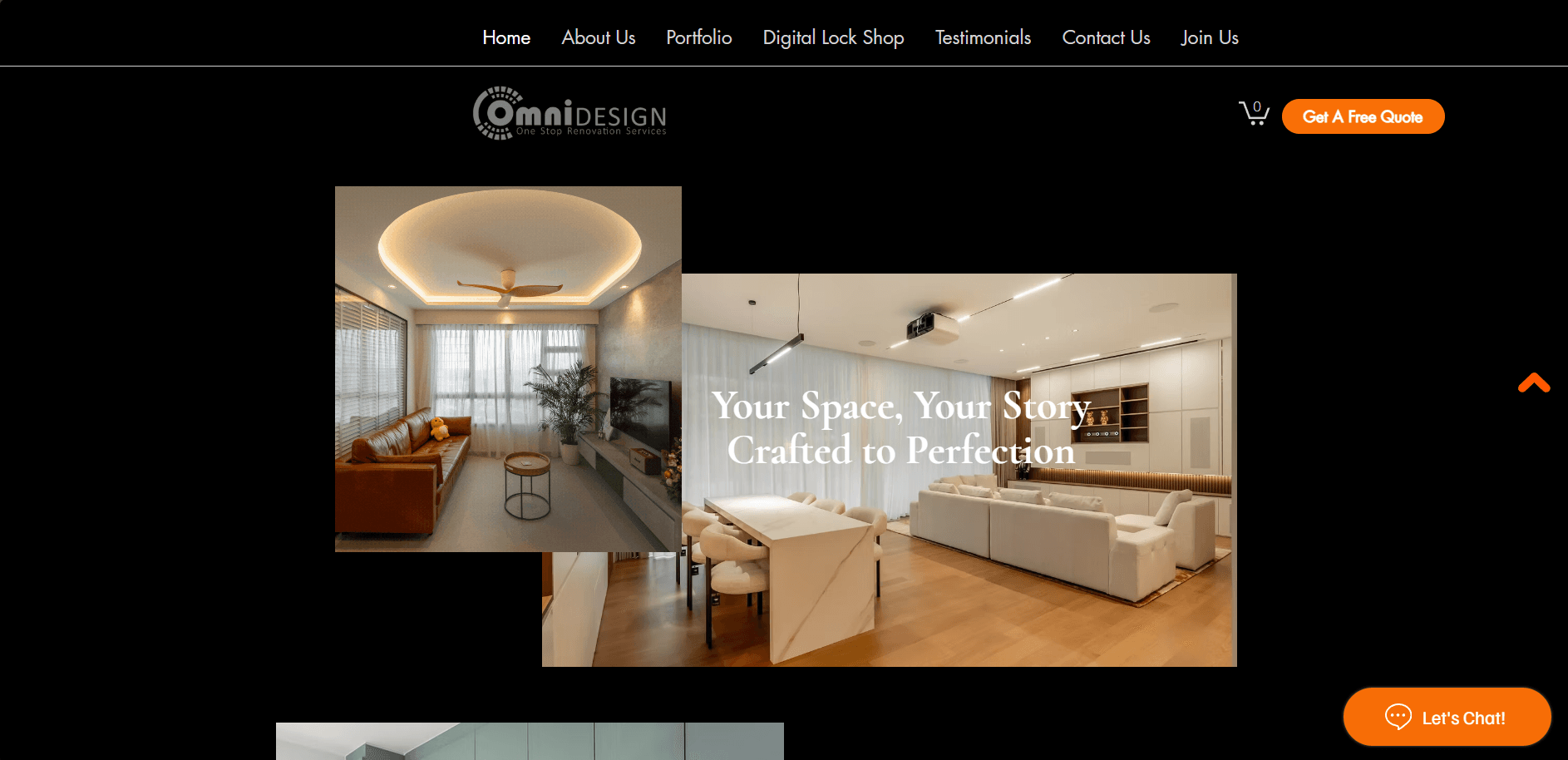
Omni Design protects commercial budgets by producing joinery and built elements through its 16,000-square-foot facility, avoiding third-layer fabrication pricing premiums. Its HDB, CaseTrust and RCMA credentials lower regulatory risk expenditure, ensuring renovation spends don’t expand through compliance corrections.
Material procurement happens at scale, converting supply chain strength into cost stability for commercial clients. Build planning prioritises durability-to-cost ratio, protecting companies from low-quality replacements disguised as savings. Labour coordination is centralised, reducing inefficiency surcharges from misaligned contractor schedules. Designs are engineered for ageing resilience so commercial interiors don’t require premature capital refreshes.
Hidden spending through rework, misfitting or redesign is minimised through precision fabrication. Workplace layouts are economy-tested to reduce unused footprint expenditure. All pricing aligns with long-term operational practicality, not momentary visual priority. For companies who audit renovation value through lifecycle spend, Omni delivers one of the most controlled cost-to-build ecosystems.
Starry Homestead
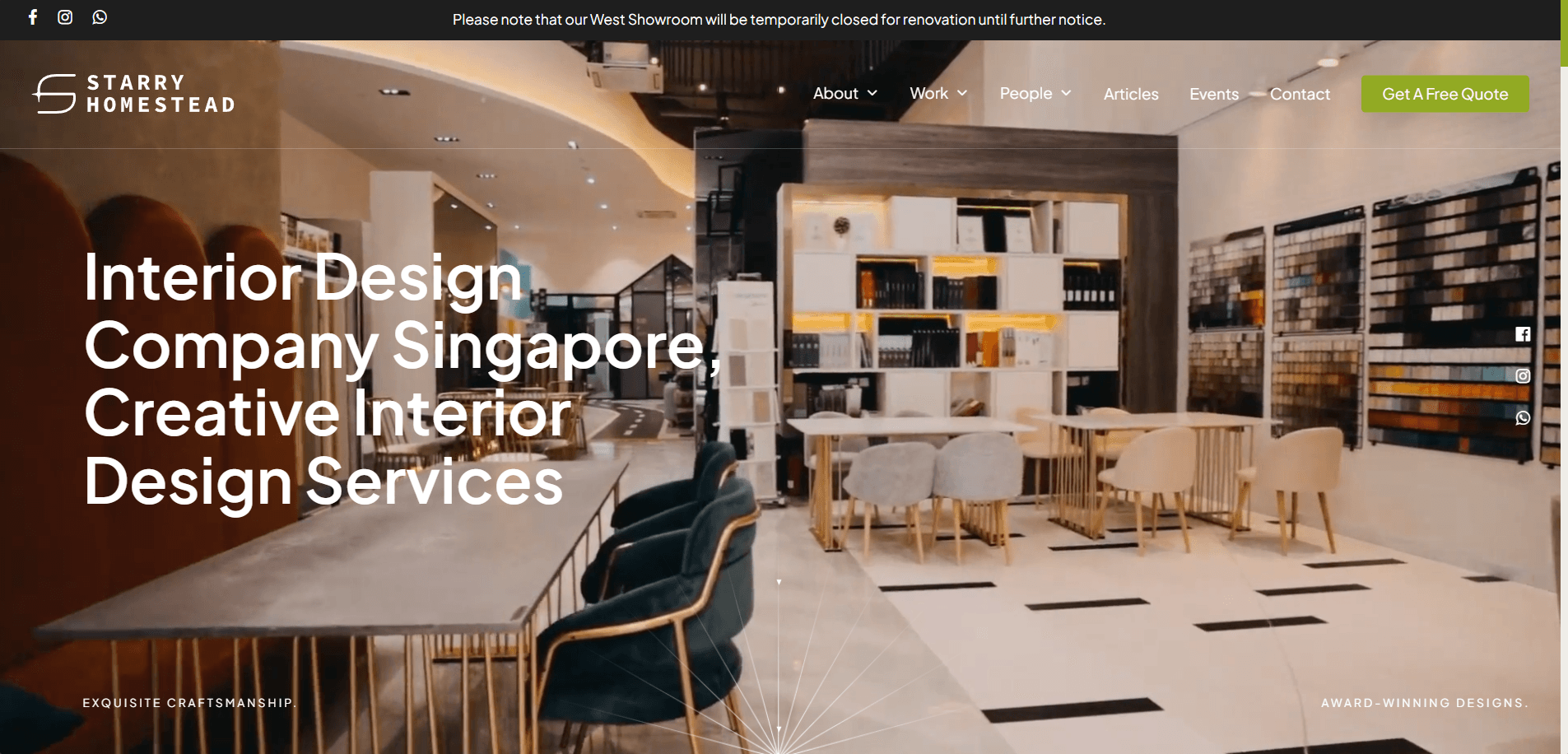
Starry Homestead speaks directly to businesses that don’t want the cheapest quote, but the smartest cost-to-lifespan value for their design and build investment. Its CaseTrust-RCMA accreditation means financial transparency isn’t a slogan, but a regulated standard that protects clients from price ambiguity. The firm is known for award-winning work that balances commercial durability with considered design, proving that budget responsibility does not require aesthetic compromise.
Material specifications are selected by asking: “How many years will this function without degrading, and what will replacement cost in downtime and capital?” rather than “Which looks most dramatic today?” Their repeat-client rate reflects long-term cost satisfaction, not short-term design excitement. Scope clarity is emphasised early, minimising late design changes that typically trigger financial variance.
Their CARE principle translates into accountability for build integrity, aftercare responsiveness and fair pricing logic. Instead of chasing fleeting trends, designs are built for relevance longevity, reducing the frequency of expensive renovation cycles. Clients avoid overpaying for embellishments that don’t yield operational value. For businesses who measure a good renovation by cost resilience, lifespan performance and design restraint, Starry Homestead aligns with long-game spending logic.
Singapore Carpentry
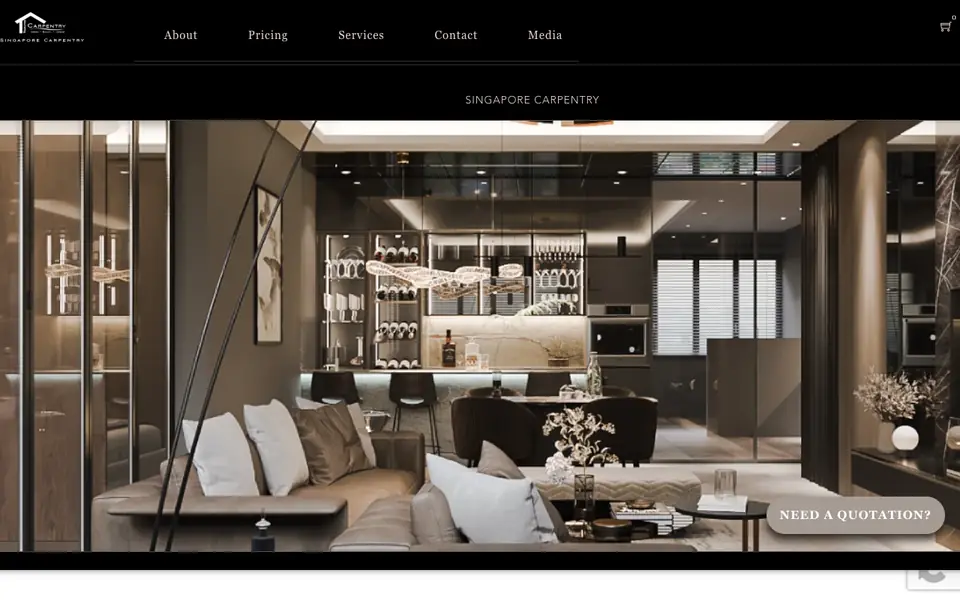
Singapore Carpentry provides one of the clearest financial advantages in commercial renovation: full manufacturing control, which removes expensive middle-layer fabrication markups. Owning a 50,000-square-foot production facility allows them to price joinery and built-in installations without outsourcing inflation or contractor gambling on margins. Automated production lines reduce defect rates, minimising rework labour and material wastage that often drive hidden budget overruns.
Bulk material purchasing further lowers unit cost, transforming savings into long-term budget efficiency instead of one-time discounts. Because fabrication scheduling is internal, commercial teams avoid expensive delays caused by third-party production queues. Their E0-certified boards and durability-first material standards reduce premature replacement spending, particularly in high-touch commercial environments.
Installation precision reduces repeat site visits, patchwork corrections and warranty claims that disrupt operations. Lead-time control means companies avoid idle contractor payment windows waiting for outsourced components. Cost transparency is strengthened because pricing is derived from direct production economics, not speculative markups. For businesses reviewing commercial renovation partners from a spend-efficiency perspective, Singapore Carpentry offers one of the strongest value levers: ownership of production cost.
Exquisite Renovation Works
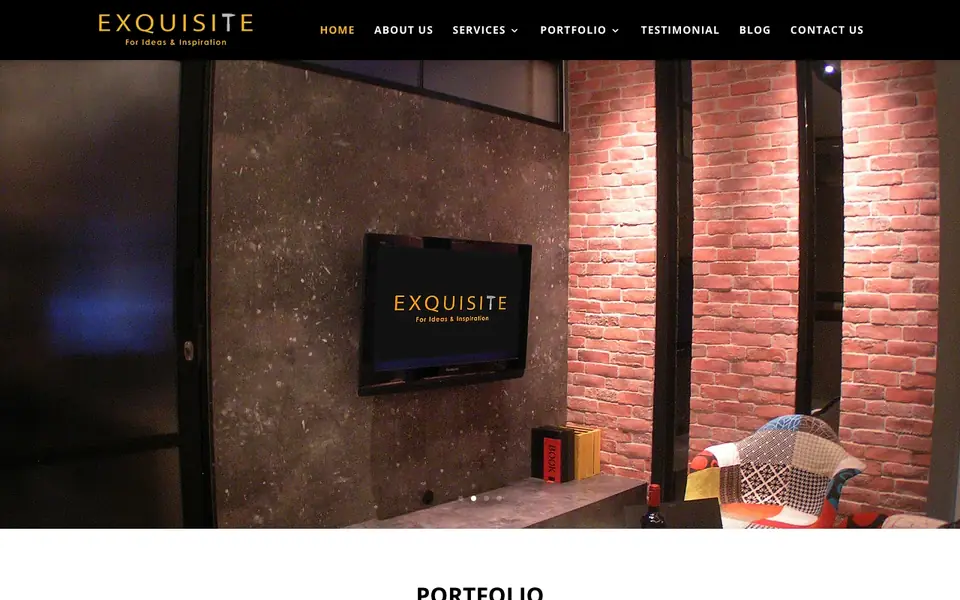
Exquisite Renovation Works is built for organisations that want renovation dollars spent on durability, not decorative volatility. Decades in the industry reduce cost misjudgments that come from inexperienced prep and price forecasting. Compliance credentials lower businesses’ exposure to approval delays, revisions and penalty expenses. Long-term tradesmanship protects clients from premature repair cycles. Lifecycle planning ensures surfaces, hardware and fixtures are selected for endurance under commercial intensity.
Decisions are guided collaboratively, reducing redesign bills that stem from ambiguity. Craft precision ensures fewer corrective works post-handover. Supplier accountability reduces cost fluctuation risk. Designs balance aesthetic assurance with commercial lifespan logic. For companies comparing renovation value through a cost-protection lens, Exquisite Renovation Works values preservation over posturing.
Eight Design

Eight Design appeals to commercial clients who want regulatory peace of mind without paying penalty premiums caused by non-compliant design decisions. With BCA and CaseTrust-RCMA certifications, businesses avoid the financial risk of halted builds, non-approvals or mandated rework. In-house carpentry reduces procurement layering costs, giving clients better material price efficiency without cutting manufacturing quality. The firm prioritises renovation endurance by selecting finishes, boards and hardware based on wear exposure, cleaning frequency, tenant type and daily usage levels.
Its cost planning approach treats each commercial space as a long-term asset, not a short-term visual moment. Layout optimisation centres on reducing dead rentable zones, circulation wastage and underutilised footprint spend. Site execution is structured to eliminate repeat call-backs, retouching fees, and avoidable patch jobs after handover.
Build coordination is sequenced to protect clients from labour spike charges or staged work premiums. Design details are calibrated to combine commercial performance with visual confidence, not decorative excess. For companies assessing Commercial Interior Designers through a full-cost-of-ownership framework, Eight Design delivers controlled spending through regulatory, manufacturing and material discipline.
Ft2 Interior Design
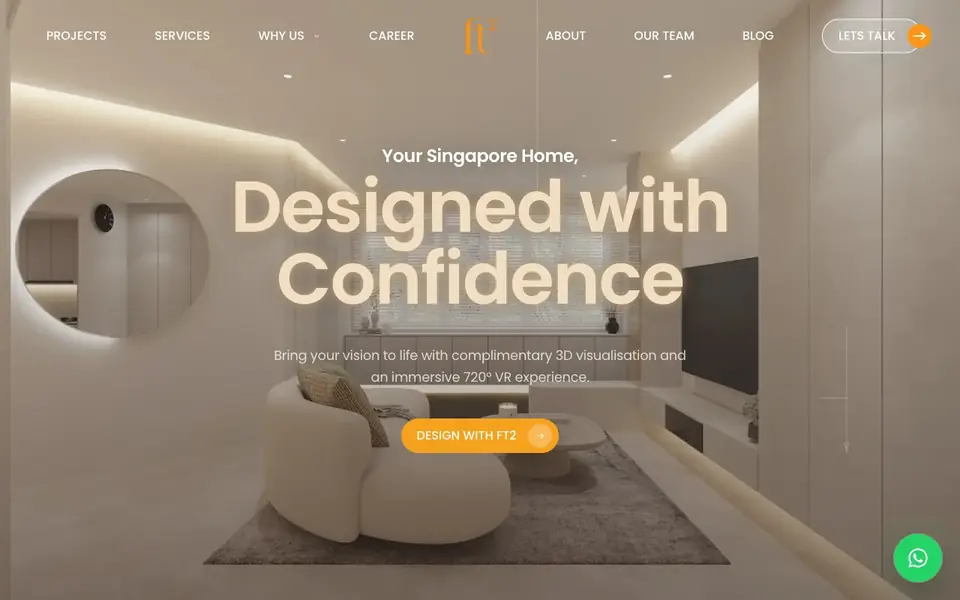
Ft2 Interior Design was built for commercial clients who want to validate costs before committing to contracts that absorb their budget. By presenting mockups, cost breakdowns and feasibility insights upfront, companies avoid spending weeks designing environments that later prove financially unrealistic. Their AI-supported pricing reduces human estimation inaccuracy that commonly triggers mid-project budget escalations.
Decision timelines are deliberately compressed, reducing billable redesign cycles that quietly erode project funds. Material recommendations prioritise lifecycle value, calculating replacement frequency, degradation probability and maintenance cost visibility rather than showroom impact alone. The firm’s transparency-first model ensures companies pay for execution, not padded contingencies or ambiguity buffers.
Commercial timelines are structured to limit downtime spend in active workplaces or retail fit-outs. Budget logic is rooted in cost-to-usage ratio, ensuring durability, cleanability and longevity are priced ahead of ornaments. Pricing discipline is enforced from concept to completion, not recalibrated after scope slips. For buyers comparing Commercial Interior Designers by financial defensibility, Ft2 offers one of the clearest cost-intelligence frameworks in the market.
Revo Reno
Revo Reno specialises in removing wasteful spending through structured project governance that protects commercial budgets from emotional design detours. Family-led oversight reduces internal miscommunication that typically results in duplicated scope costs, timeline extensions or unclear contract interpretation. Commercial build decisions are filtered through long-term asset logic instead of short-term optics.
Clients avoid overspending on non-durable choices that look premium for months but degrade under real operational conditions. Cost-impact trade-offs are discussed early, preventing expensive ideological pivots during construction. Workflow pacing protects businesses from idle contractor billing while awaiting delayed materials or approvals.
Build longevity reduces early repair spend, lowering long-term capital outflow. Finish selections are tested against cleaning frequency, contact friction and commercial wear exposure. Costed decisions are justified operationally, not emotionally. For commercial buyers who value renovation frugality without sacrificing proper build standards, Revo Reno protects spending through grounded execution.
Renozone
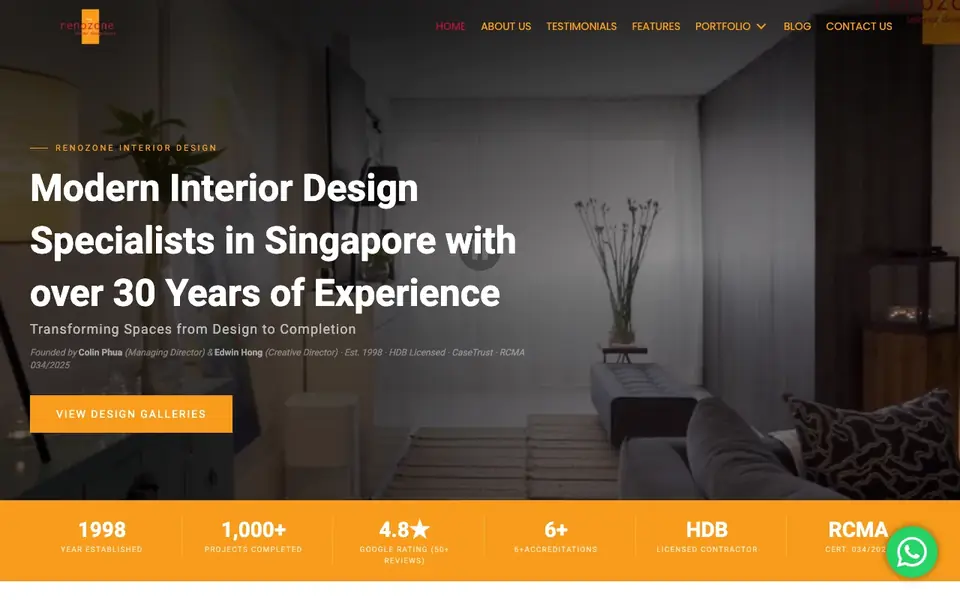
Renozone delivers renovation economy through sheer execution maturity, applying lessons from 10,000+ completed projects to avoid unnecessary financial detours. Its accreditation strength prevents companies from absorbing compliance penalties, slowed approvals or conditional retrofitting expenses. Supplier familiarity reduces price volatility, converting long-term trade relationships into stable procurement costing.
Commercial planning focuses on endurance, ensuring companies don’t pay twice for finishes that fail early. Clear scope control prevents project budgets from ballooning beyond agreed parameters. Construction sequencing is calibrated to eliminate expensive timeline friction between trades.
The firm forecasts long-term material degradation so buyers understand when and why replacements would occur. Design decisions are filtered through practicality, not catalogue seduction. Commercial layouts are value-optimised for space efficiency, not visual drama. For companies benchmarking renovation partners by financial prudence rather than conceptual bravado, Renozone delivers muscle through experience.
Zoro Interior
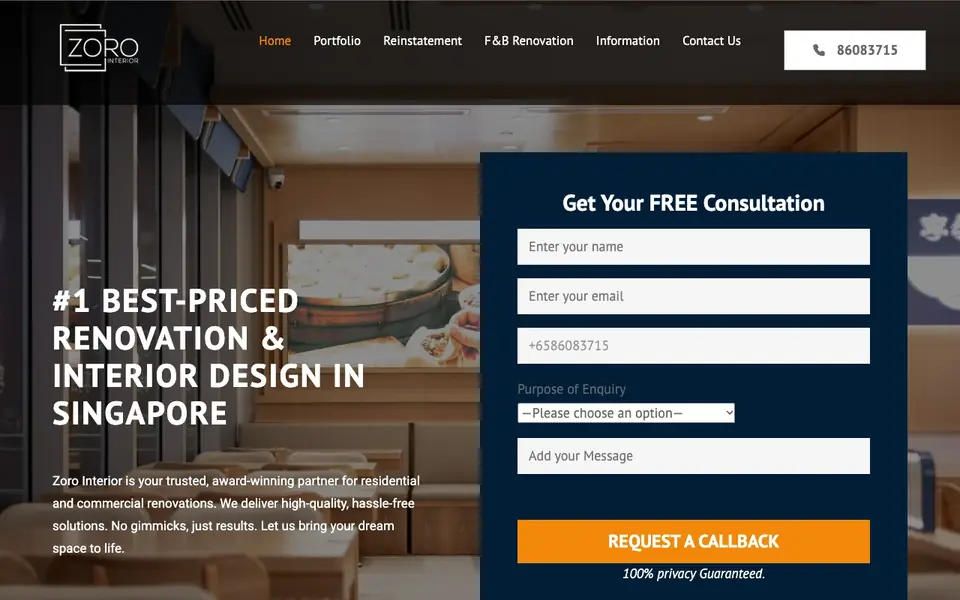
Zoro Interior appeals to cost-watching businesses because nearly all build functions are handled internally, cutting contractor mark-ups that typically inflate renovation spend. With in-house carpenters, electricians and project managers, fewer trade layers mean fewer price escalations and scheduling delays. Accreditations such as CaseTrust, bizSAFE3 and BCA licensing reduce the risk of costly compliance errors or certification rework.
Its experience with F&B outlets and reinstatement projects demonstrates money-saving competence in high-regulation commercial builds. Transparent, itemised quotations help companies spot what they are actually paying for, reducing hidden cost surprises mid-project. The firm evaluates design choices based on durability per dollar rather than trend lifespan.
Avoidance of unnecessary decorative spend protects operational budgets. Completing regulatory submissions directly saves outsourcing fees. Businesses with tighter renovation windows benefit from its controlled workflow and consolidated labour pool. For value-driven buyers comparing commercial design firms that stretch every dollar, it is a grounded, cost-conscious contender.
Earth Interior Design
Earth Interior Design protects commercial renovation spending by treating design as a systems problem, not a styling exercise. Award-winning execution signals fewer construction mistakes, meaning less budget wasted on revisions, corrections or avoidable site errors. Budget transparency is built into proposals, preventing stealth cost creep through ambiguous line items.
Material guidance evaluates true lifecycle cost, replacement friction and wear threshold, not short-term finish appeal. Design integrity is measured by operational sustainability, not showroom impact. Time efficiency reduces contractor hold-fee losses, downtime expense and project drag costs.
Accuracy in build reduces handback punch-list expenses. Clients pay for meaningful spatial performance, not decorative noise. Budget direction aims for longevity ROI, not impulsive spend. For commercial buyers who measure value by cost resilience and execution precision, Earth delivers dependable renovation economics.
Zenith Arc
Zenith Arc is a strong fit for companies that want budget predictability without redesigning the outcome multiple times to make pricing work. Its early 3D modelling and scope-lock process prevent the number one renovation cost enemy: mid-build concept changes that send budgets spiralling. The firm negotiates commercial supplier agreements that reduce material variability and stabilise purchasing prices even during market fluctuations.
Site scheduling is optimised to prevent cost compounding from contractor overlap, overtime or repeated mobilisation. Design guidance is cost-filtered, ensuring finishes, fittings and build complexity align with operational value, not impulse appeal. Because its proposals are tightly itemised, clients gain line-level visibility into what they fund, at what margin, and for what expected lifespan.
Project pacing protects companies from downtime costs in active workplaces, retail floors and tenant-handover environments. Durability planning is baked into material recommendations so replacement cycles stretch longer, reducing future capital spend. Smart detailing is used in place of expensive overengineering to achieve visual sharpness without overspending. For commercial buyers comparing value certainty across Commercial Interior Designers, Zenith Arc competes through budget control rather than budget trimming.
Comfort Home

Comfort Home reduces commercial renovation cost volatility by keeping trade coordination internal, ensuring budgets don’t inflate through contractor layering premiums. Its BCA and bizSAFE credentials protect companies from compliance rework expenses. Cross-trade alignment prevents billed downtime caused by staggered subcontractor mobilisation.
Layout recommendations protect businesses from spending rent on low-yield spatial zones. Materials are filtered for impact durability, cleanability and replacement cycle length. labour harmonisation prevents double charging from contractor schedule clashes. Workspace handover pacing avoids operational revenue disruption.
Design avoids hyper-customisation that accelerates depreciation. Workmanship durability reduces long-term maintenance spend. For commercial buyers who evaluate renovation partners by cost stability and lifespan resilience, Comfort Home is engineered to minimise financial leakage.
Plan3 Design & Build
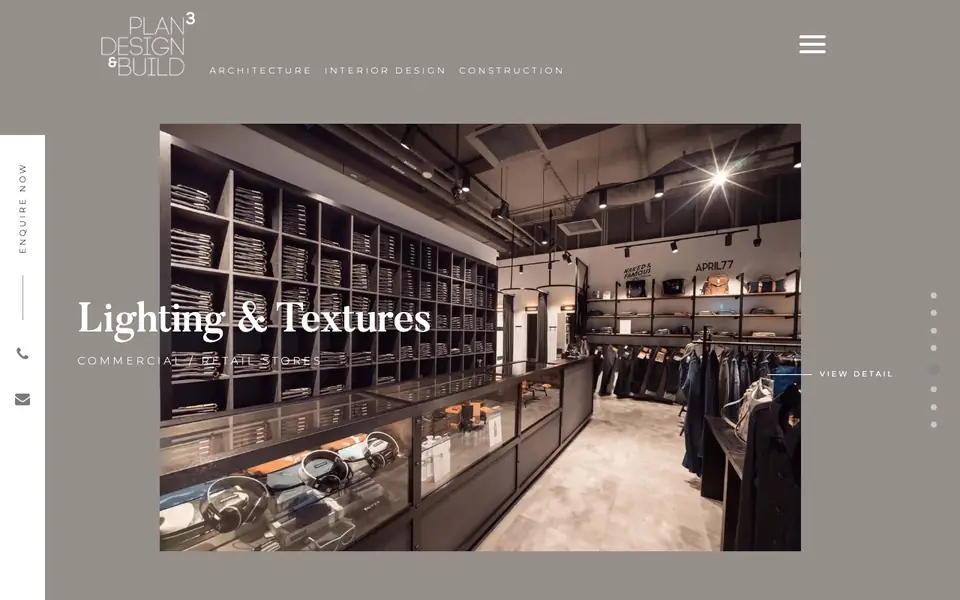
Plan3 Design & Build delivers value by forcing every design decision to pass a simple financial question: “Does this increase daily operational performance enough to justify the spend?” Their integrated design-build model eliminates multiple contractor margins, allowing clients to stretch renovation budgets further without lowering quality. Instead of designing visually first and cost-proofing later, the team cost-models concurrently, preventing expensive concept revisions.
This protects companies from wasting money on design features that don’t scale commercially or justify long-term upkeep. The firm’s procurement strategy is built on repeat supplier leverage, reducing material unit costs without sacrificing durability. Planning includes lifespan forecasting, so clients see cost projections not just for installation, but for maintenance cycles, failure probability and eventual replacement timing.
Build execution is sequenced to reduce trade overlap, short-term manpower spikes, and delay penalties that silently add thousands to commercial budgets. Aesthetic refinement is delivered through smart detailing, not expensive layering. Clients gain not the cheapest renovation but the most economically defensible one. For companies benchmarking Commercial Interior Designers through a value-per-dollar lens, Plan3’s discipline offers measurable cost efficiency.
Urban Home Design

Urban Home Design blends design recognition with cost predictability, ensuring businesses pay for execution reliability rather than aesthetic gamble. Award validation reflects lower rates of costly design misinterpretation or client dissatisfaction. Their planning lens emphasises timeless commercial relevance, reducing renovation churn expenditure. Build clarity prevents budget drift caused by vague scope interpretation.
Durability expectations are matched to business usage, protecting material longevity. Maintenance forecasting prevents premature reinvestment. Spatial efficiency reduces wasted floor cost. ROI is framed in operational value, not visual hype. Cost boundaries are honoured through workflow discipline. For budget-conscious firms comparing renovation partners, repeatability and reliability are the real currencies of savings.
IS Design Studio
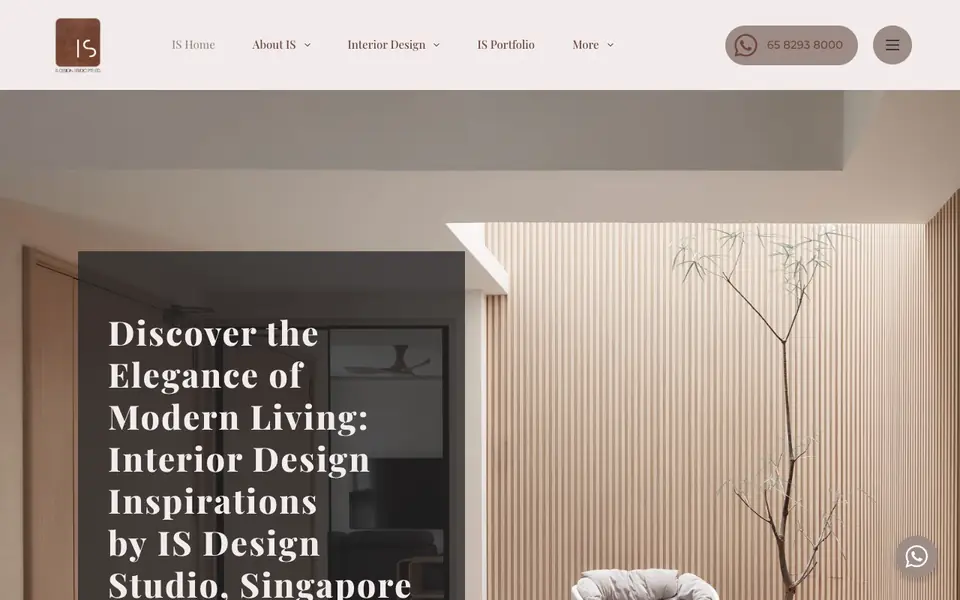
IS Design Studio saves clients future refresh costs by designing spaces that outlive trend cycles and aesthetic expiry dates. Structural design expertise prevents spatial investment errors that require costly rebuilds. Global perspective with local practicality prevents expensive imported over-specification. Material choices are benchmarked against lifespan under commercial stress. Visual articulation is balanced with cleanability, maintenance load and replacement cost risk.
Footprint planning minimises ineffective rentable space expenditure. Design pays for longevity rather than reinvention. Clients invest in spatial intelligence, not feature overload. Long-term cost ownership matters more than first-week impressions. For businesses comparing renovation value beyond day-one visuals, IS balances endurance with economy.
Earnest Designer & Project
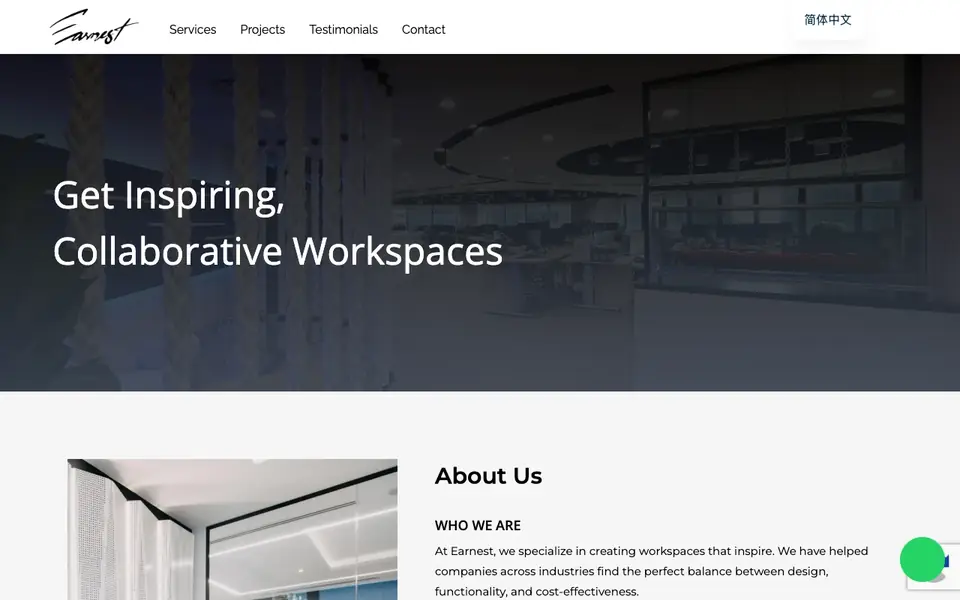
Earnest measures renovation cost success by workplace output, not decorative abundance. Commercial space planning reduces operational friction that silently drains time and money. Lease-fit guidance prevents bad property investment decisions that trigger expensive retrofit requirements. Award credibility lowers execution risk and rework spending.
Spatial logic reduces per-person and per-function floor cost waste. Build choices prioritise high-contact durability, not high-style fragility. Functional form outweighs ornamental excess. Budget allocation tracks business impact per square metre. Cost is justified by productivity lifespan, not trendability. For commercial buyers tying renovation spend to operational return, Earnest designs for economic relevance.
Mr Designer Studio
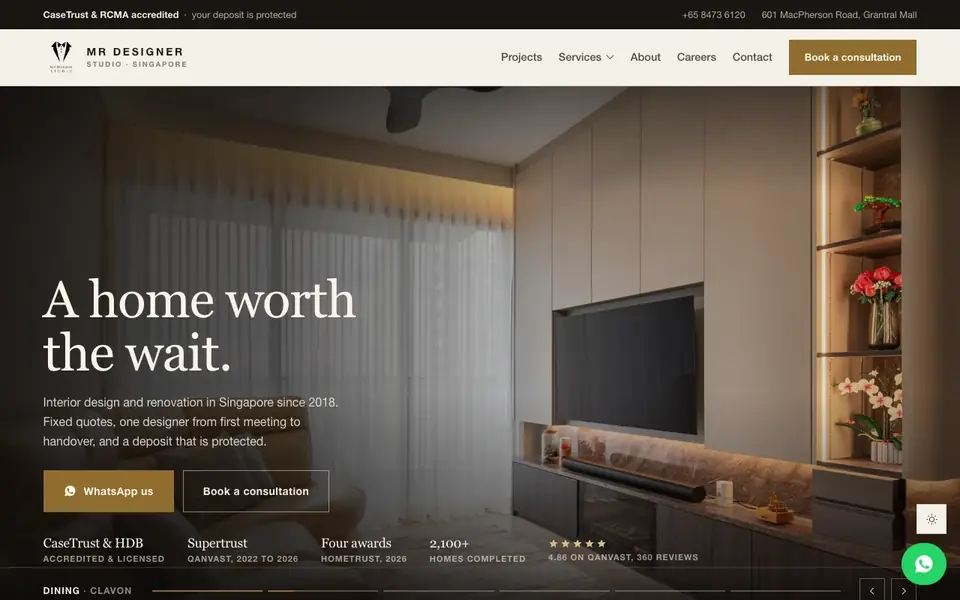
Mr Designer Studio reduces renovation spend leakage by keeping core build trades in-house, preventing the compounded markups that occur when electrical, carpentry, tiling and painting are subcontracted across multiple providers. This internal coordination also limits schedule friction, contractor idle charges and inconsistent workmanship that results in costly rectifications after handover. Their award credentials reflect not only aesthetic approval but pricing and process reliability, meaning fewer deviations between quoted and actual expenditure.
Each design recommendation is filtered through usability, durability and lifespan logic, ensuring companies don’t pay more later to correct choices that only performed well in presentation mood boards. Their planning prioritises cost-to-impact decisions, balancing spatial personality with commercial resilience. Construction sequencing reduces bottlenecks that lead to rushed execution, labour inefficiencies and reactive cost increases.
Project oversight minimises the need for return visits, patch fixes or last-minute hardware substitutions, common budget drains in office and retail builds. Design decisions aim for consistency and longevity, reducing the frequency of expensive refresh cycles. Financial value is measured by retention of quality, not intensity of decoration. For budget-conscious businesses comparing large renovation commitments, Mr Designer Studio protects capital by protecting process.
Fineline Design
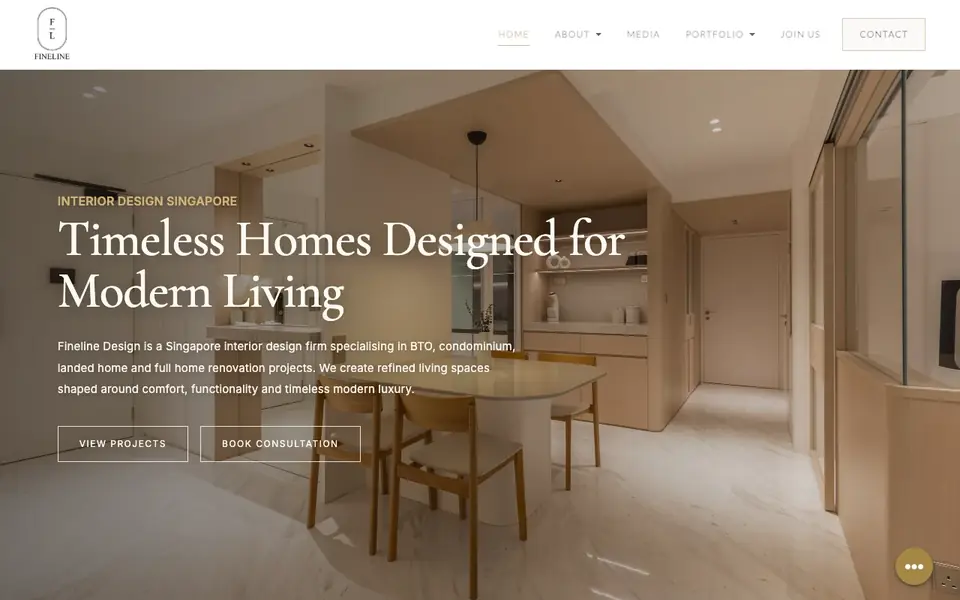
Fineline Design protects budgets by defining the cost conversation before the design conversation expands unchecked. CaseTrust accreditation guards against price ambiguity and contractor inconsistency. Discovery discussions are structured to prevent overdesign spend. Construction plans favour longevity, reducing refresh frequency expense.
Project continuity minimises staggered restart billing. Aftercare responsiveness reduces post-handover cost surprises. Design balances aspiration with sustainment economics. Clients pay for durability, not decorative density. Cost accountability is maintained from bid to delivery. For companies comparing renovation firms by spend reliability, Fineline prioritises financial trust.
Vitas Design
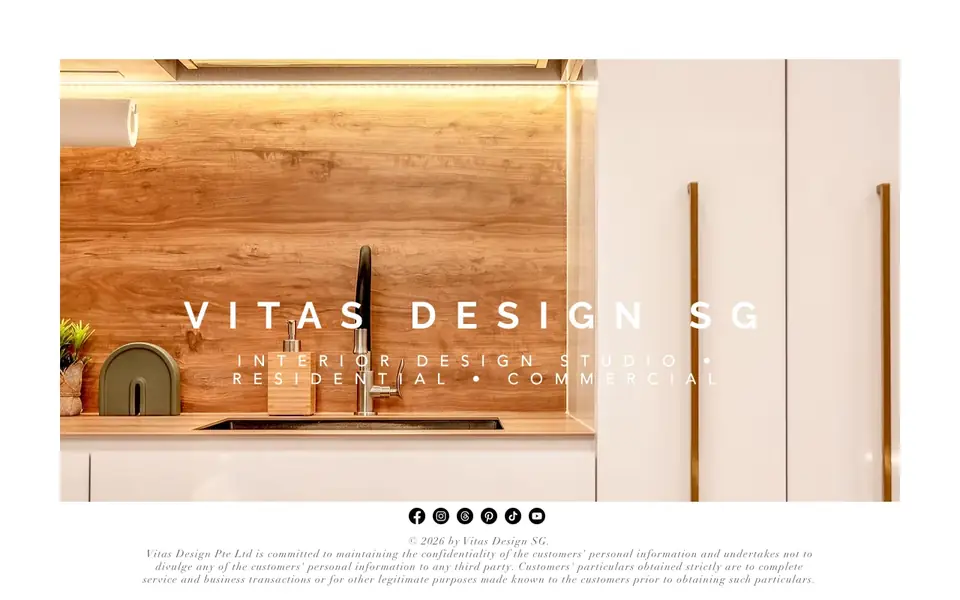
Vitas Design protects commercial budgets by designing collaboratively, reducing expensive misalignment between concept expectations and construction reality. Client clarity lowers iteration cycles, preserving planning resources. Design choices are filtered through cost-performance logic, not trend impulse. Supplier selections prioritise longevity per dollar rather than brand prestige.
Space functionality is priced by measurable utility, not sculptural statements. Customisation is applied strategically where it generates operational advantage, not cosmetic saturation. Waste-minimised building methods reduce disposal and excess material spend.
Design decisions aim for long-term expense reduction, not short-term spectacle. Execution prevents cumulative cost leakage across micro-decisions. For value-conscious businesses seeking return over theatrics, Vitas prioritises worth over noise.
Thom Signature Design
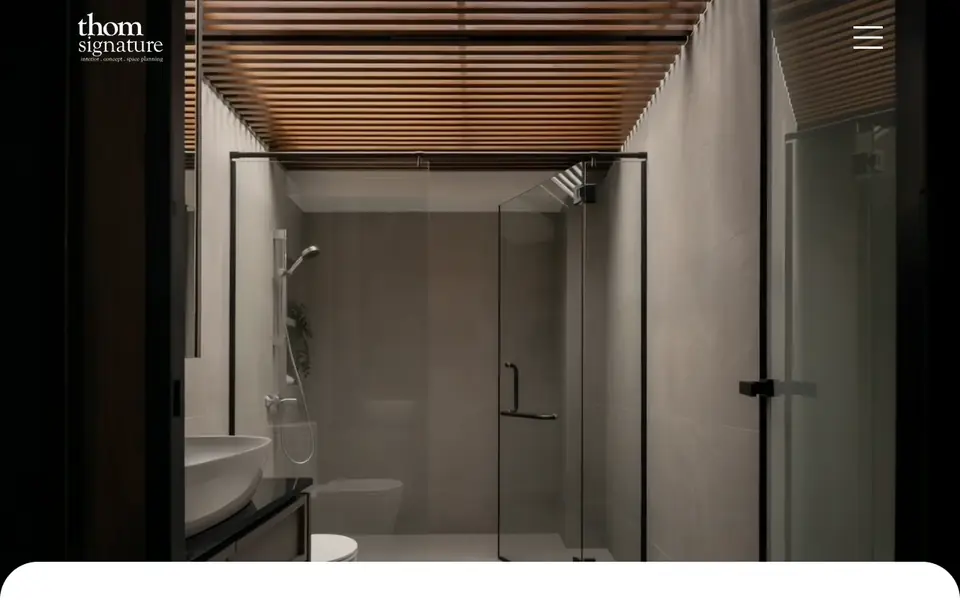
Thom Signature Design is built for clients who want assurance that premium results are backed by genuine longevity, not temporary visual appeal that demands repeat spending. Its 20-year history working with multinational corporations means cost planning is informed by enterprise-level procurement discipline, reducing waste, redesigns and material experimentation. HDB, BCA and RCMA credentials also lower the risk of compliance-driven rework fees, a hidden expense that often appears late in commercial renovation.
Every material suggestion is evaluated by lifespan-to-cost ratio, ensuring finishes, surfaces and hardware don’t look refined at the expense of rapid wear or early replacement. Their design choices prioritise adaptability, so spaces don’t need expensive overhauls every time a business shifts direction or rebrands slightly. Instead of upselling maximum visual density, the firm edits rigorously, removing cost-heavy features that don’t deliver measurable commercial value.
Their long-standing supplier relationships also support more competitive pricing stability, especially for large fit-outs with strict budgets. Project planning is tightly sequenced to reduce labour overlap, overtime charges and delays that inflate commercial spend. Build quality is measured by durability and daily-use resilience, not just showroom presentation. For decision-makers looking to stretch renovation capital over years instead of months, Thom Signature consistently favours value sustainability over unnecessary spectacle.
SG Interior Design
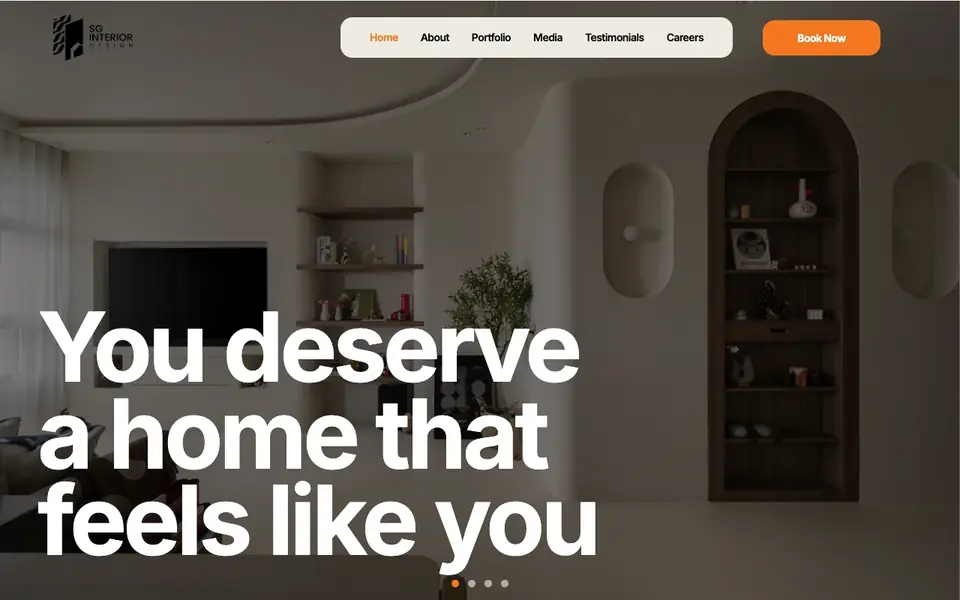
SG Interior Design removes one of the biggest renovation cost stressors, uncertainty, by structuring proposals around predictable pricing, phased accountability and transparent line-item clarity. Internal designer training reduces dependency on expensive freelancers or external consultants, lowering the hidden soft costs of planning and coordination. Their five-year workmanship warranty protects companies from absorbing early repair or replacement fees, which frequently outweigh upfront savings from cheaper contractors.
Design recommendations are anchored in workplace practicality, focusing on durability, foot-traffic tolerance, hygiene maintenance and material longevity rather than trend theatrics. Their structured scoping minimises surprise variation orders, a common financial gap where budgets quietly balloon mid-build. Space planning maximises usability per square foot, helping tenants make better use of what they already pay rent for, rather than compensating for spatial inefficiency with expensive add-ons.
Build oversight reduces trade misalignment, repeat mobilisations and contractor idle hours that quietly drain commercial funds. Their design logic aims to balance expression with cost-defined limits, not exceed them. Project pacing protects businesses from extended closure or handover delays that escalate operational losses. For companies that evaluate Commercial Interior Designers based on cost predictability, SG Interior Design prioritises financial clarity over creative ambiguity.
Ace’s Design
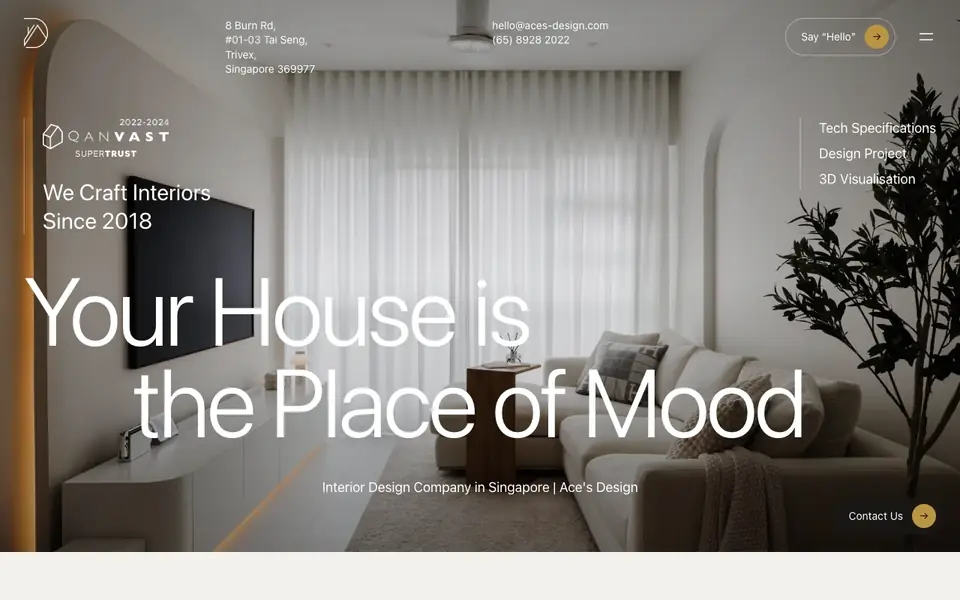
Ace’s Design protects budget integrity by defining financial boundaries early and locking scope before emotional design revisions have a chance to inflate cost. Their two-year warranty protects clients from absorbing early defect repair costs or premature part failures. Multi-year award recognition reflects cost reliability, delivery consistency and repeat satisfaction rather than one-off visual hype. Design planning prioritises function first, aesthetics second, ensuring spending is anchored to necessity before refinement.
Decision trees are commercialised to prevent impulse selections that increase cost without improving durability or workplace performance. Build accuracy minimises snags, punch-list spending and post-handover contractor call-backs.
Creative solutions focus on value engineering, ensuring design innovation lowers spend rather than elevates it. Their workflow protects against overruns by anchoring milestones, approvals and supplier selections to cost parameters. End-result polish prioritises perception of quality, not the price tag behind it. For commercial clients who want tidy budgets and trustworthy execution, Ace’s Design builds value without waste.
Supersketch Designers
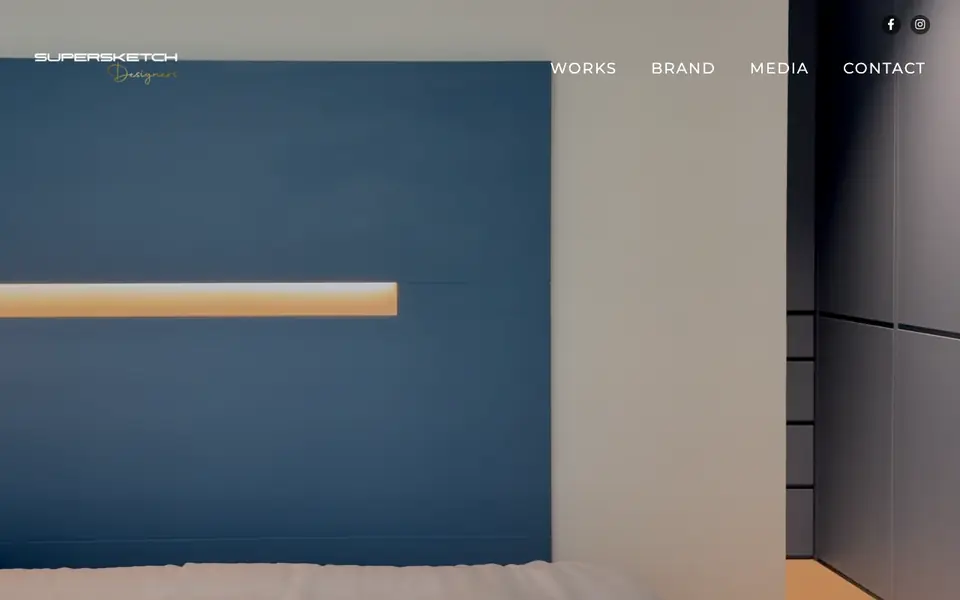
Supersketch approaches commercial interiors like long-term assets, not one-time aesthetic projects, ensuring every investment remains usable, adaptable and cost-efficient long after completion. Layouts are engineered to maximise functional area, reducing the common problem of businesses unknowingly paying premium rent for zones their floor plan fails to utilise well. Materials are selected from a cost-to-wear perspective, favouring those that resist abrasion, fading, cleaning erosion and high-contact deterioration.
Decorative decisions are restrained, with the firm avoiding costly visual layers that photograph impressively but degrade quickly under real commercial conditions. Planning incorporates adaptability, minimising the need for expensive overhaul costs when brands evolve, workflows shift or compliance needs change. By centralising design direction through disciplined consultation, clients avoid budget-bleeding miscommunication that leads to revision cycles, redraws and site changes.
Execution prioritises precision build so structural elements, cabinetry and fixtures perform without recurring maintenance invoices. Their cost philosophy rewards meaningful architectural decisions, not ornamental noise. Project spend is evaluated by long-term commercial payoff, not one-off visual impact. For enterprises that measure renovation value by financial endurance, Supersketch delivers performance-led design with spending discipline.
Greeen
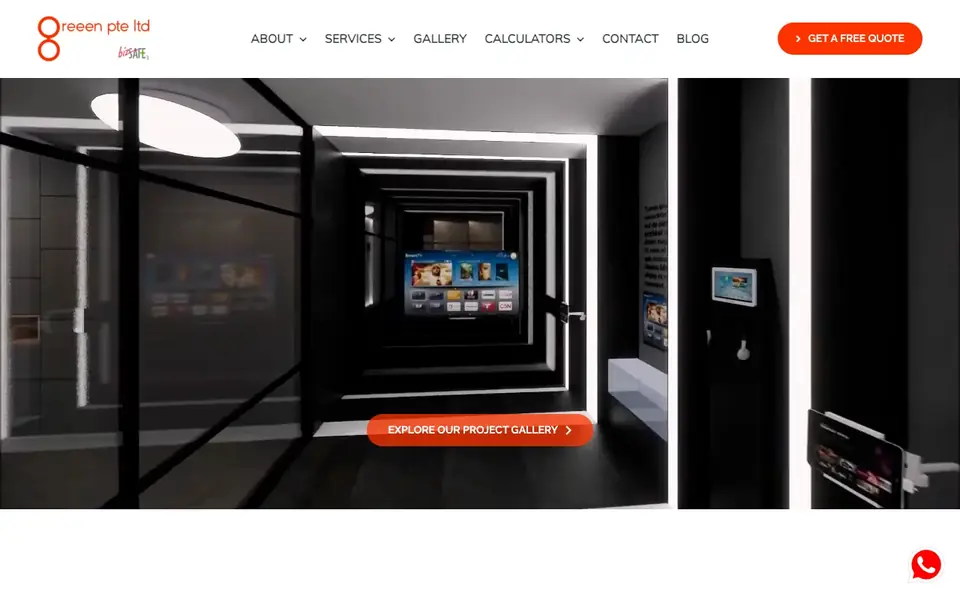
Greeen protects commercial renovation budgets by assigning a dedicated project manager whose sole role is to prevent schedule slippage, contractor misalignment and cost ripple. Their SME 500 recognition reflects sustained operational reliability, internal financial rigour and commercial delivery predictability. Timelines are built to eliminate extended downtime, rushed handover premiums and overlapping lease-renovation expenses. Design decisions focus on long-term workspace practicality, not trend-dependency that demands reinvestment every few years.
Material selections balance performance, cleaning tolerance, brand representation and price-to-lifespan efficiency. Their process prevents communication bottlenecks that often translate into time loss, labour extension costs or duplicated work. Handover discipline preserves business continuity, avoiding revenue loss caused by delayed space activation.
Build quality protects companies from entering repair cycles too soon post-completion. Innovations are scaling decisions, not spend escalators. For commercial clients assessing renovation firms by cost stamina and operational reliability, Greeen delivers value through structured execution, not inflated ambition.
DC Vision Design
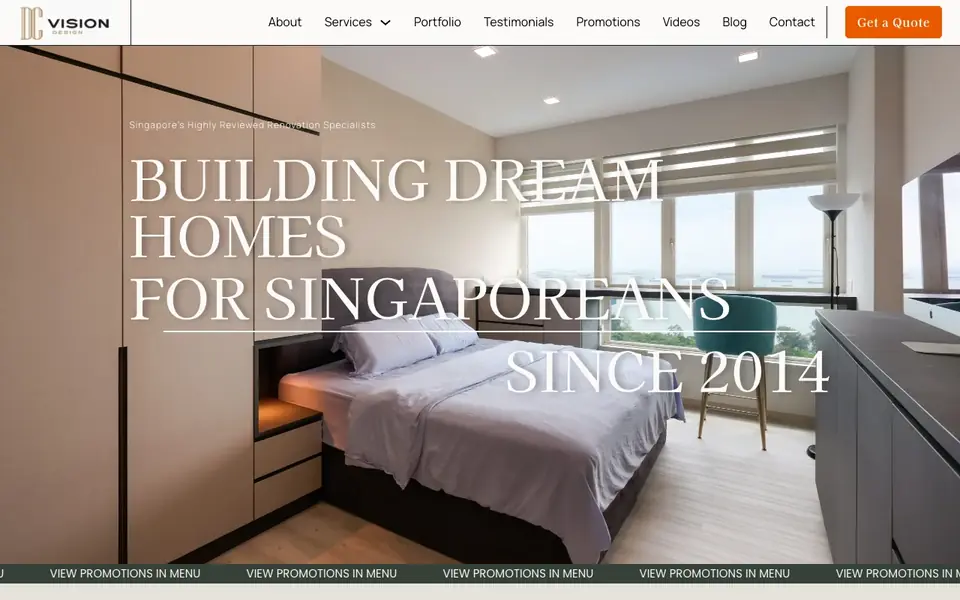
DC Vision protects commercial budgets by containing every project stage, from concept, compliance, A&A submissions, to construction, within a single accountable pipeline, preventing administrative cost leakage. Their HDB, RCMA and bizSAFE accreditations reduce the financial risk of rejected submissions, halted works, or costly regulatory revisions. Over 3,000 completed projects provide pricing accuracy that newer firms often lack, preventing underquoted builds from bloating mid-way through execution.
Site logistics are planned to reduce contractor overlap, rescheduling fees, remobilisation charges and material storage costs. Material decisions prioritise frequency of use, maintenance tolerance, replacement intervals and long-term visual retention. Clear workflow reduces downtime expense for businesses renovating live environments or preparing for lease handovers.
Design longevity is preferred over trend impulsiveness, helping companies delay future refurbishment costs. Their ability to balance reasonable pricing with durable output reflects long-term planning rather than short-term cost cutting. Aftercare responsiveness prevents minor defects from becoming major repair invoices. For companies that treat renovation as a long-cycle investment, DC Vision safeguards spending through operational discipline and experience-backed foresight.
Le Createur Interior Design
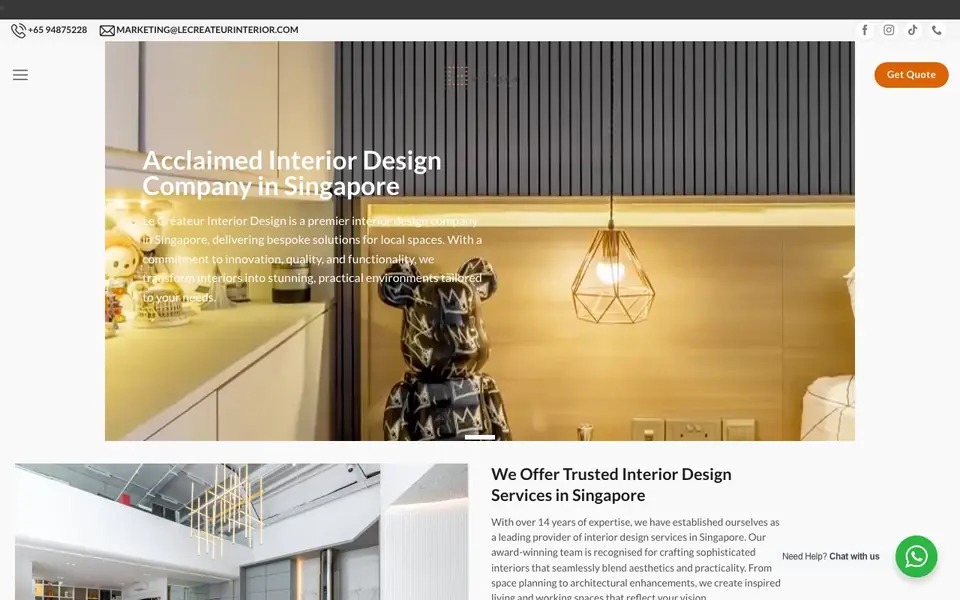
Le Createur protects renovation budgets by controlling one of the most expensive build categories: custom carpentry, which is produced through their own in-house facility rather than outsourced through multiple price layers. This vertical control removes inflated markups, stabilises production lead times and reduces defect rates that typically add hidden rectification costs. Their design direction favours timeless relevance over trend cycles, helping commercial clients avoid the financial drain of redesigning spaces simply because they visually expire too quickly.
By prioritising craftsmanship longevity rather than decorative excess, materials and details are chosen for load tolerance, surface durability, and maintenance economy. Their collaborative approach eliminates costly mid-build pivots caused by unclear creative direction, scope misunderstanding or late-stage design misalignment. Because fabrication is in-house, there is less reliance on unpredictable third-party supplier schedules that often create rushed work, delay fees or expensive interim fixes.
Their carpentry precision also means fewer reworks, replacement parts or follow-up site visits that quietly compound renovation spend. Every custom detail is validated against lifespan performance instead of showcase appeal. Build solutions focus on commercial resilience, ensuring the space remains convincing, professional and cost-efficient long after opening. For businesses comparing renovation partners by long-term value retention, Le Createur’s model protects both budget and build integrity.
Space Atelier
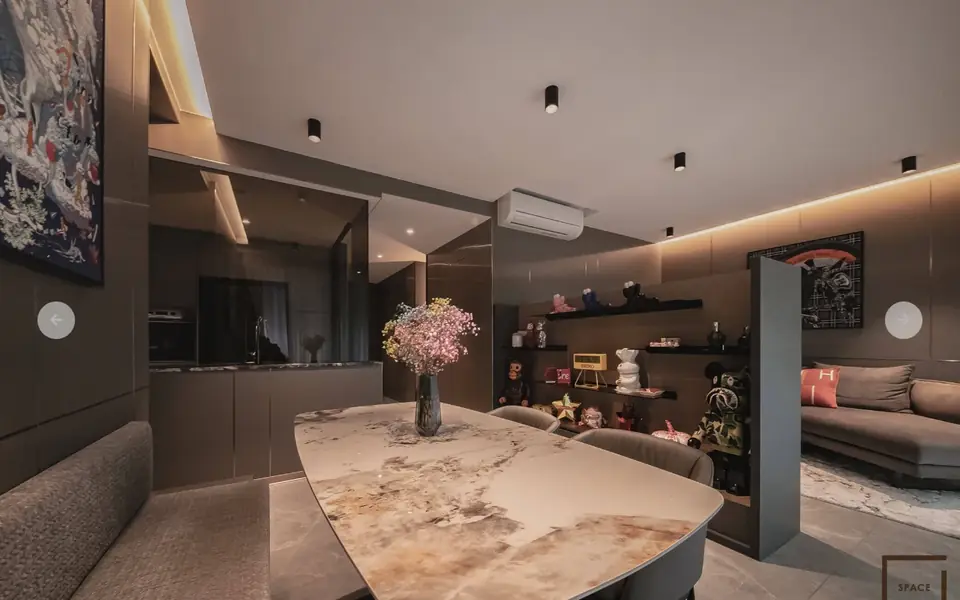
Space Atelier preserves renovation budgets by anchoring design decisions to practicality and lifecycle value rather than decorative thrill that depreciates rapidly in commercial environments. Their multi-award recognition reflects consistent project efficiency, client satisfaction and cost responsibility over repeated cycles. Design proposals prioritise materials that maintain appearance well under repetitive use, heavy contact and cleaning regimens.
Their collaborative scoping reduces misalignment costs, change requests and redraw fees that erode budgets before construction even begins. Delivery timelines are structured to prevent delays that lead to idle contractor charges or lease overlap costs. Aesthetic direction is always secondary to commercial durability, acoustic performance, lighting economy and maintenance ease.
Their methodology aligns investment with longevity, preventing clients from repeating renovations earlier than financially sensible. Layout strategy reduces dead zones, circulation waste and underperforming square footage. Design restraint lowers decorative overspend without diminishing perceived quality. For commercial clients reviewing Commercial Interior Designers from a cost-to-life perspective, Space Atelier delivers enduring relevance, not temporary dazzle.
A & D Designer’s Group
A & D Designer’s Group prevents financial overrun by merging architectural logic with interior execution, removing the expensive disconnect between spatial planning and construction reality. Internal expertise removes reliance on paid external consultants, lowering soft cost overheads without compromising technical precision. Their architectural grounding allows them to optimise layouts for compliance, utility flow, load tolerances and structural efficiency, decisions that prevent costly reconstruction work later.
Budget decisions are validated against build logic, not mood boards, reducing the spend-ripple created by aesthetic-driven over-specification. Floor utilisation is audited for commercial value so tenants don’t pay rent on space they can’t capitalise on operationally. Construction expertise minimises remedial works, site reconfiguration costs and contractor re-entry fees.
Material recommendations factor depreciation timelines, maintenance realities and replacement intervals. Each build decision is anchored to profitability, not presentation. Their philosophy favours lasting spatial ROI, not short-lived optical appeal. For businesses comparing Commercial Interior Designers by long-term cost governance, A & D protects both floor and finance.
Sennex
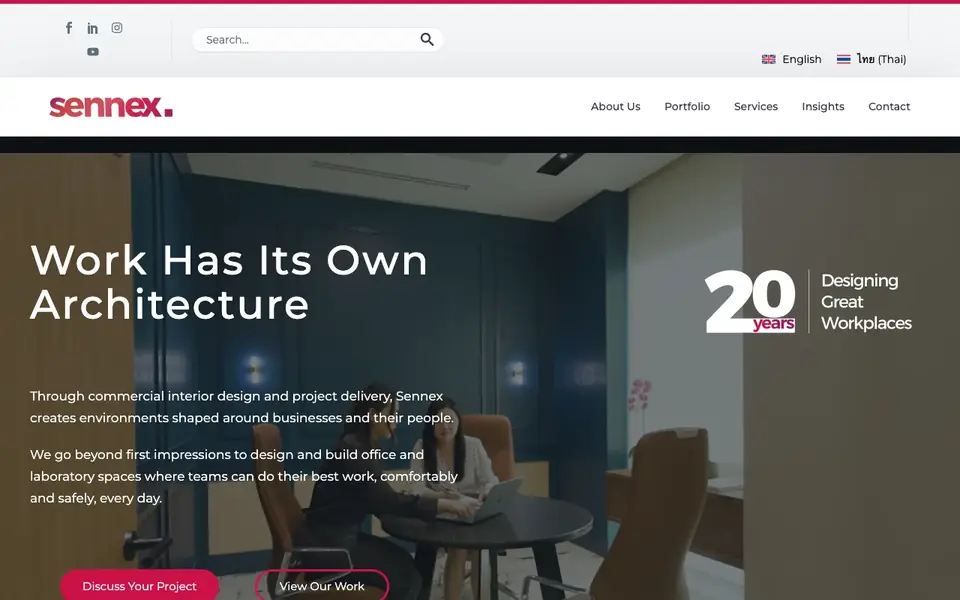
Sennex serves buyers who want office and technical space planning done right the first time, reducing expensive post-handover reconfigurations. Its 800-project track record shows fewer costly missteps during complex builds such as labs and corporate upgrades. The firm leans on data-guided spatial decisions, lowering the risk of paying for inefficient layouts. Investing upfront in strategic workplace planning ultimately protects long-term occupancy costs.
Rather than charging for aesthetics alone, cost is justified by measurable productivity and space optimisation improvements. Labour and build sequencing are planned to prevent budget leakage from downtime or rework. Its disciplined approach lowers the chance of change orders, a common price escalator during renovations.
Material selection is calibrated for endurance, meaning replacements happen less often. Commercial projects benefit from logic, safety and workflow efficiency rather than decorative spend. For comparison shoppers focused on value preservation, Sennex delivers structured cost logic over visual indulgence.
Conclusion About The Best Commercial Interior Designers In Singapore
The goal of this guide was never to showcase expensive designers, but dependable Commercial Interior Designers who deliver value that lasts. A well-designed workspace shouldn’t create financial regret after handover day. It should continue to prove its worth long after invoices are settled. Every company listed here was reviewed with an eye for sensible budgets, practical planning and durable execution. Good design is powerful, but good spending decisions are even better.
As you explore your options, look for clarity in quotes, logic in layouts and honesty in recommendations. Let this list be your first filter, not your final decision. Reach out, compare proposals and test how well each firm listens to your priorities. A smarter shortlist leads to smarter spending, and smarter spending leads to better business outcomes. Start the conversation, ask the pointed questions and explore the designers that respect both your vision and your budget.
Note: For the latest and most recent updates on the above recommendations, refer to their respective website for the most accurate information.
Questions people ask
How Do I Know If A Design Quote Is Worth The Cost?
Look for justified material choices, clear labour breakdowns and designs that solve functional problems, not just visual ones.
Should I Pick The Cheapest Designer?
Not always. The cheapest option may cost more later if materials, planning or workmanship aren’t built to last.
How Do Designers Help Me Avoid Overspending?
Experienced teams prioritise necessary spend, reduce waste and recommend materials with better long-term value.
What Makes Commercial Interior Projects Cost-Efficient?
Lean layouts, durable finishes, phased execution and disciplined design editing keep budgets under control.
Can Good Design Still Happen On A Moderate Budget?
Yes, when planning is intentional, priorities are clear and material choices favour longevity over trend.
Should I Invest More In Layout Or Finishes?
Layout always comes first. Good flow improves productivity and customer experience better than surface upgrades alone.